

 Search
Search
Search

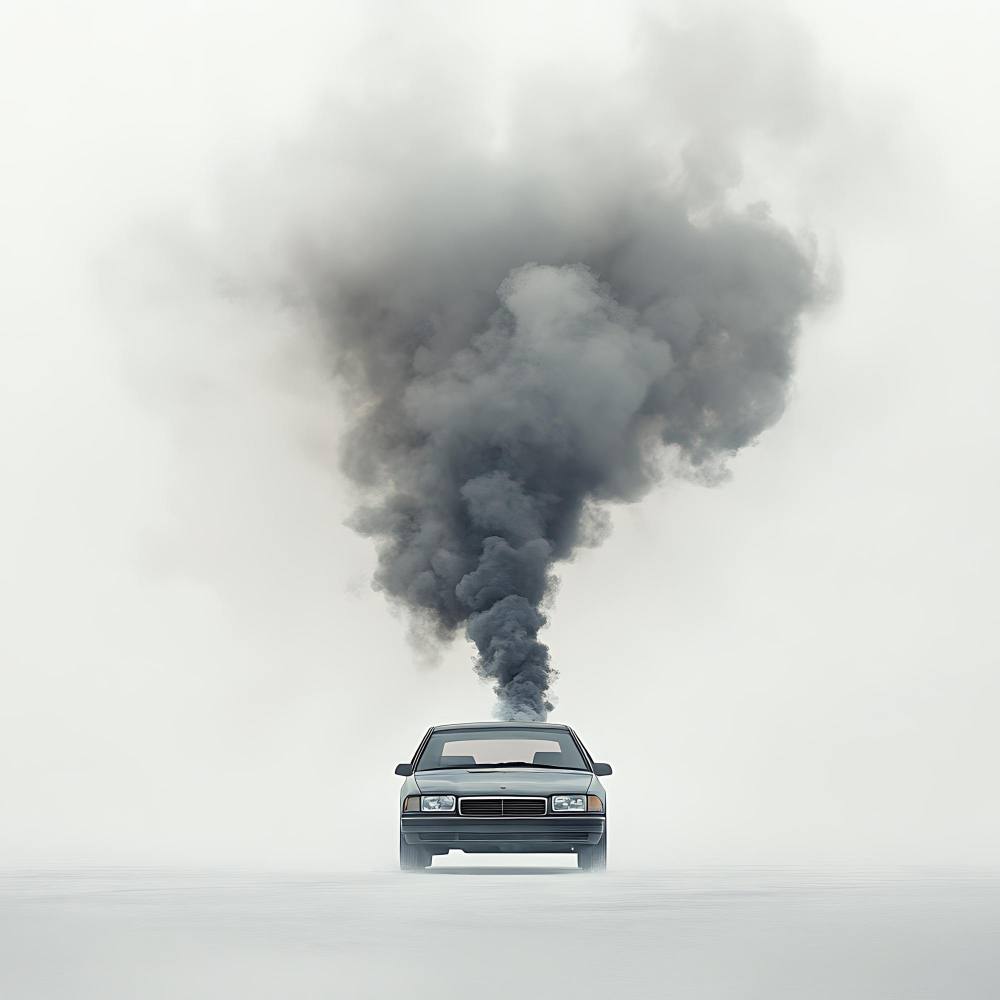
Smoke pouring from under your hood or trailing from your exhaust is never a good sign. Your car is trying to tell you something, and ignoring the message can cost you an engine. The color, location, and timing of the smoke all give clues about what's going wrong. The team at Wright's Car Care put together this guide to help you understand what your car is telling you and when to bring it in.
Smoke color acts like a diagnostic tool. White, blue, black, and gray each point to different systems in your vehicle. White smoke usually relates to your cooling system or condensation in the exhaust. Blue smoke means there's burning oil somewhere in the engine. Black smoke indicates a fuel mixture problem where too much gas enters the combustion chamber. Gray smoke can be tricky because it overlaps with a few possibilities, including transmission fluid leaks or burning oil. Pay attention to when the smoke appears, too. Thin wisps that disappear quickly are less alarming than thick, persistent clouds. The location matters as well. Smoke from the tailpipe points to internal engine or exhaust issues. Smoke from under the hood suggests leaks onto hot surfaces or problems in the engine bay. All of these details help a mechanic pinpoint the source faster, so take mental notes before you bring your car in for auto repair.
White smoke on a cold morning is normal. Condensation builds up in the exhaust system overnight, and it burns off as the engine heats up. This smoke is thin, disappears within a few minutes, and doesn't indicate any problem. Thick white smoke that continues after the engine reaches operating temperature is a different situation. This type of smoke usually means coolant is leaking into the combustion chamber. A blown head gasket is the most common culprit. The head gasket seals the cylinder head to the engine block and keeps coolant and oil in their separate channels. When it fails, coolant enters the cylinders and burns with the fuel. You might also notice your coolant reservoir dropping without visible leaks under the car. A sweet smell from the exhaust confirms coolant is burning. Other causes include a cracked cylinder head or a cracked engine block, though these are less common. Both allow coolant to seep into places it shouldn't be. Driving with a coolant leak creates serious risks. Your engine can overheat quickly without enough coolant circulating through the system. Overheating warps metal and causes even more damage. If you see persistent white smoke, pull over and shut the engine off. You might need to arrange a tow or have the vehicle inspected before driving to an auto repair shop in Chamblee, GA.
Blue smoke means your engine is burning oil. Oil can enter the combustion chamber through worn piston rings, damaged valve seals, or a failing PCV valve. Piston rings seal the gap between the piston and cylinder wall. When they wear down, oil slips past and burns with the fuel. Valve seals keep oil from dripping down the valve stems into the cylinders. Hardened or cracked seals let oil through, especially after the car sits overnight. You might notice blue smoke at startup that clears up after a minute or two. A stuck or clogged PCV valve can also push oil into the intake manifold, where it gets burned. Burning oil damages your catalytic converter and messes up your spark plugs. Your engine will also consume oil faster than normal, which means you'll need to top it off between oil changes. Check your dipstick regularly if you suspect this problem. Black smoke points to a rich fuel condition. Your engine is getting too much gas and not enough air. A clogged air filter restricts airflow and throws off the mixture. Faulty fuel injectors can spray too much fuel into the cylinders. A malfunctioning oxygen sensor sends incorrect data to the engine computer, which then miscalculates the fuel delivery. A stuck fuel pressure regulator keeps pressure too high and floods the engine with gas. Black smoke wastes fuel, increases emissions, and leaves carbon deposits on engine components. It's not as dangerous as white or blue smoke, but it still needs attention.
Your first step depends on how severe the smoke is. Thin smoke that clears up quickly may not require you to pull over immediately. Thick smoke or smoke accompanied by warning lights on your dashboard demands serious trouble. Pull off the road as soon as you can do so safely and turn off the engine. Pop the hood, but don't try to open it right away if you see steam or heavy smoke. Wait a few minutes for things to cool down. Opening the hood on an overheating engine can release scalding steam. Once it's safe, look for obvious signs of trouble. Check for puddles forming under the car. Green or orange fluid indicates a coolant leak. Dark brown or black fluid suggests an oil leak. Look for disconnected hoses or cracked reservoirs. Don't attempt to remove the radiator cap while the engine is hot. The cooling system stays pressurized and can spray boiling coolant. If your temperature gauge reads high, do not restart the engine. Call for a tow instead. Driving an overheating car, even a short distance, can destroy the engine. For less severe smoke, you may be able to drive carefully to a nearby shop. Keep your eye on the temperature gauge and pull over again if it climbs. Write down everything you observed so you can describe it to the technician. Note the smoke color, when it appeared, any smells, and any sounds. These details speed up the diagnostic process.
Smoke from your car signals that something needs attention now, not later. Bring your vehicle to Wright's Car Care at the first sign of trouble. Our technicians diagnose smoke issues every day and know exactly what to look for. We'll identify the source, explain your options, and complete the auto repair correctly the first time. Wright's Car Care is the auto repair shop drivers in our community trust for honest service and quality work. Call us today or stop by to schedule an appointment.
Wright's Car Care offers the most reliable import and domestic auto repair services. Read our blog posts to learn more about your vehicle.
Ever had a look under your car? Perhaps not. Few car owners take the time to look under their car to examine the condition. If there is an issue with…
READ MORE
A well-tuned engine is a symbol of precision and power. However, that power can begin to wane over time due to a wide range of reasons, prompting immediate attention to prevent getting stuck by the roadside when you least expect it. The last thing any driver wants is an engine that loses power, causing inconveniences and potentially dangerous situations on the road. At Wrights Car…
READ MORE
Driving often feels routine and predictable. With years of experience behind the wheel, most drivers think there is nothing more…
READ MORE
Most people do not think about the transmission until it starts acting up. Then it is hard to ignore. Whether…
READ MORE